

Julian Sayarer is a long-distance cyclist and travel writer. He has circumnavigated the world by bicycle, writing books about roadside anthropology across Europe, Palestine, China, the United States and Latin America.
All photography by Julian Sayarer for Noema Magazine.
I. Copenhagen
Despite its grey summer sky, the Copenhagen waterfront cut a picture of a utopian city, where the angular timber structures of harbor lidos abutted glass and steel office buildings. In the public pools at the water’s edge, bathers swam lengths in perfect crawl while others hugged themselves in towels, cold but smiling. Behind schedule, I swam quickly, tasting water that seemed almost fresh but was only the world’s least saline sea, the waters of the Baltic that cradle the Danish capital.
Drying and dressing hurriedly, I made my way along the quay into Christiania, a commune founded by bohemians and socialists that is still renowned as a sort of free state lined with bakeries, cafes and flower pots. Coming steadily into view was my destination: the high masts and furled sails of a tall ship, the Tres Hombres, with a cargo of vermouth and wine newly arrived from Getaria, a Basque port in northern Spain.
The Tres Hombres has no engine, only sails. It represents a bold experiment on the fringes of the international shipping industry, which generates tens of billions of euros in annual profits and 3% of anthropogenic global output of greenhouse gases. The Tres Hombres, by contrast, puts out no emissions at all. The boat is owned by a Dutch company, is flagged to Vanuatu and on this journey had a crew mostly French. The vermouth they were unloading was made by Italians in Spain. I had been invited aboard for about three weeks, wind permitting, to deliver the remaining four barrels of Spanish wine to La Rochelle, halfway down the Atlantic coast of France, where a full hold of French wine would be loaded and sailed back north to Amsterdam.
The venture is an idealistic riposte to the high-volume, high-polluting, highly murky world of global shipping, and business is small but steady. Tres Hombres has crisscrossed the Atlantic and the seas around Europe, keeping a regular cargo repertoire that is narrow but rich: coffee from Dominica, Latin American cacao, wine from France and Spain, some honey and olive oil from Iberia, vermouth and a lot of Caribbean rum. Paid passengers and boatbuilding tools down in the hold sometimes supplement the manifest.
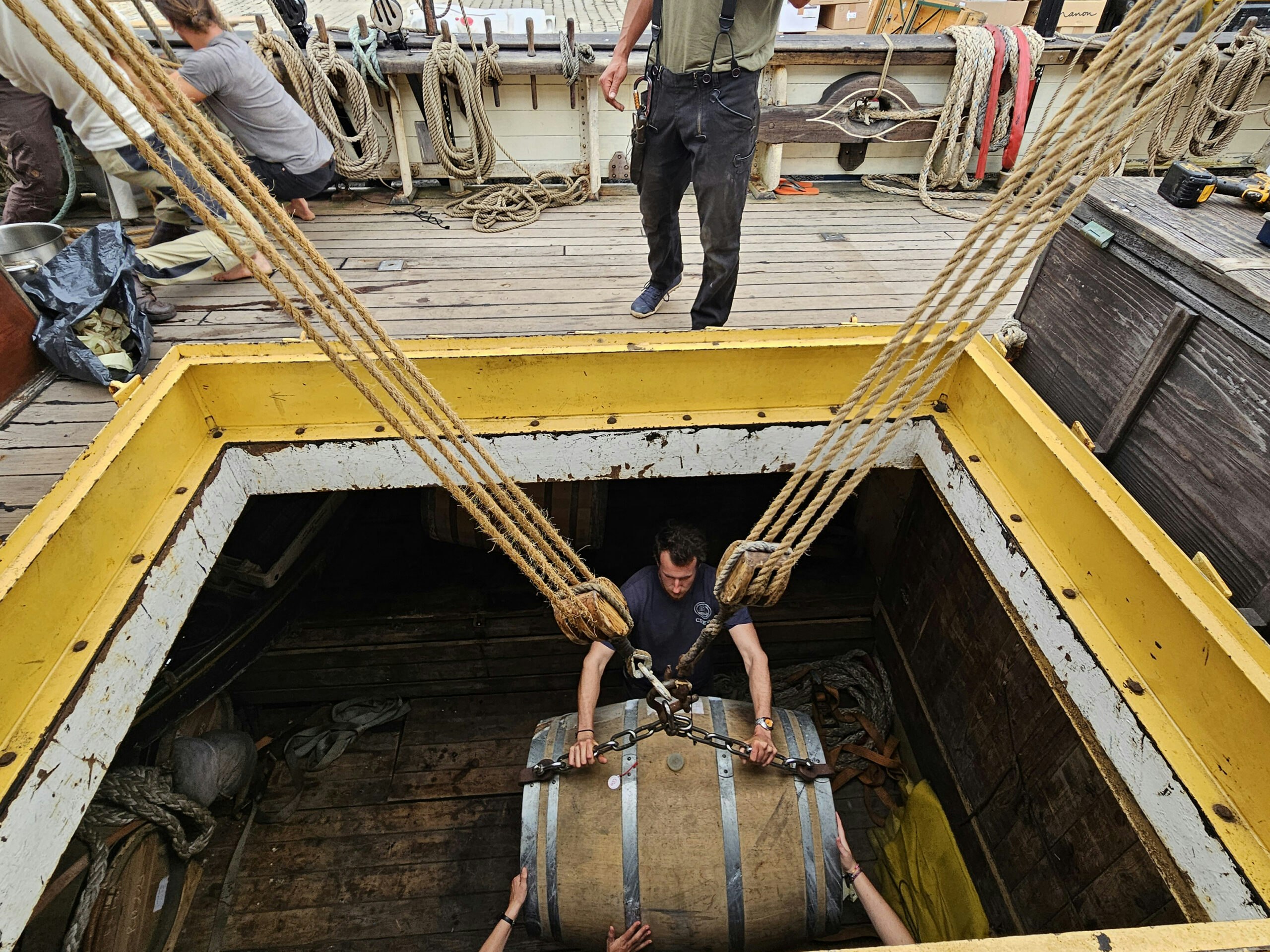
On the quay, I got a sense that the ship’s crew didn’t expect customers to lend a hand with the cargo, but they did so anyway. The owner of a Copenhagen wine bar, Rosforth & Rosforth, was there to help unload and bottle the vermouth being winched up from the hold. His teenage son practiced working a forklift, and their enthusiasm for shipping cargo by sail was palpable. Though the transport cost was around a euro per bottle more than the owner normally budgeted, between his ability to shuffle margins, belief in the idea of clean shipping and the willingness of his customers to pay a small premium, he made it work.
My task, assigned when I presented myself to the first mate, was affixing new labels to the old vermouth bottles, covering up the remnants of years of collaboration: Cargo Under Sail 2020, 2023, 2024 formed a palimpsest of labels interrupted by the pandemic, and I duly affixed 2025. As I worked, I overheard a discussion between shipmates and the restaurateurs about an upcoming trip to a rural island close to the city, a popular weekend destination that’s home to a renowned bakery. They were talking about the Swedish concept of flygskam — “flight shame” due to the environmental impact of air travel — and weighing a more complicated ferry-train journey, or perhaps sailing there. Soon, I would come to learn that there is a sort of contagion in the idealistic passion for sailing and how it could remake travel and transportation; steadily, you come to see its potential everywhere, route by route.
Next to me in the chain unloading and labeling vermouth was Vivien, a French naval architect wearing sturdy sandals and a long ponytail. He had relocated to Copenhagen to design boats and was now part of the extensive Tres Hombres family.
“When I graduated as an architect, they said I had three options: oil and gas, military, cruises,” he told me.
“And two were evil and one pointless?” I inquired.
He laughed. “They are all evil,” he said, and reminded me that cruise ships dump chemicals and effluent into the sea, and that many of their passengers travel to disembarkation ports by plane.
Vivien told me he started out in Paris with a large offshore engineering firm that works mostly on oil and gas platforms, the sort of company so huge its name is unfamiliar to most people. Its different country offices have a habit of cannibalizing each other in the hypercompetition for work. Among Vivien’s projects was a boat that had a refinery on board to facilitate loading at offshore oil rigs. His hope had been to one day help the company pursue floating wind turbines, an inevitability in the global wind industry’s future because shallow seabeds, which are more cost-effective and less complicated to develop than floating turbines, are being rapidly used up. We worked together for hours that first day, growing a camaraderie while exchanging knowledge and ideas to pass the time in a monotonous task that perhaps, without our realizing it, was what made room for this very thing.


As we waited for the tugboat that would pilot us out of the city, I visited a shop to buy some ginger (for alleviating seasickness) and chocolate (for engendering goodwill among seamen). At a street corner among Christiania’s lounging artists, I noticed some foxgloves with light pink petals growing through stones next to a utility meter box with an old nameplate upon it: DONG, for Danish Oil and Natural Gas. DONG is no more — in 2017, it divested the last of its hydrocarbon reserves to become Ørsted, the world’s largest developer of offshore wind projects. Though this transition — from fossil fuel to renewable energy pure play — is a tall order for energy companies and transportation ones alike, DONG’s trajectory suggests it can be done, and if the forecasted catastrophes of a radically altered climate are to have any chance of being mitigated, it must be.
Back on the quay, I stood with a member of the crew who was preparing regretfully to disembark, having been aboard since the Caribbean. Under a neat blonde moustache, Bram smoked and then offered a Dominican cigar, which he said was comparable in quality to a Cuban. In a voice suffused with contentment, he described the poetry of sailing: “Sometimes you move a sheet, just a little, but you feel the wind take it different, and that change moves through the entire boat. Everybody feels it.”
Braced to the side of the tug, at last we were towed out toward the main port. We passed under the looming offices of Maersk, the global shipping giant, and in the sheer, tinted glass of its windows I saw our sails and masts reflected. Just beyond were UNICEF’s large, utilitarian warehouses. Watching them slip into the distance, I felt the multilateral world order that birthed them — imperfect, but still an articulation of the values of fairness and justice — also receding.
Off the starboard bow, a bank of wind turbines rotated. To port were dock cranes, their stevedores lowering and lifting a wall of shipping containers, a giant, corrugated metal jigsaw of red, yellow, green and brown that is pulled apart and put back together to form the Danish economy. Then the tug captain untied and threw back the lines, giving a wave as the grey sea opened before us.
• • •
That first evening we ate roast lamb: ribs and a leg brought to us by the wine bar owner in a show of his gratitude. Sprigs of rosemary, potatoes and purplish cloves of caramelized garlic decorated the joints. A little vermouth was passed around. There were strawberries for dessert.
We discussed marine courtesy. Cargo ships, the crew told me, are generally respectful; fishing boats are the worst. Technically they enjoy a right of way while fishing but often leave on their fishing signal even when not actually fishing. The previous week, the wind had suddenly died when the Tres Hombres was in the Dover Strait, and cross-channel ferries pressed by. According to international maritime regulations, a vessel should cross a shipping lane at as close as possible to a 90-degree angle, something the wind does not always make possible. The sea has rules; it imposes limits; it requires mutual consideration, especially for a sailboat. In this way, sailing is a fine allegory for how to live a life or organize a system.
The Tres Hombres was named for the three men who found it rotting in Delft in 2007 and began its painstaking restoration. With a small but committed crew, they sailed its first cross-Atlantic voyage to Haiti with humanitarian supplies in the aftermath of a hurricane. Built in Germany in the 1940s, the boat had originally moved small cargo and then served as a minesweeper after the war; for a time it had also been a fishing trawler, before its engine was removed and masts and sails added, giving it its current identity.
Of the crew on my voyage, two young French deckhands led much of the sail work, always joking and laughing as they hauled lines and climbed rigging. Off-duty, they shared a book about the Sioux hero Heȟáka Sápa, commonly known as Black Elk, and talked with sad enchantment of a culture all but eradicated by American genocide. One of the captain’s two mates was a Virginian, Jeremy, whose last sailing job was aboard a climate research vessel in the Pacific on behalf of the Sea Education Association. The first mate was Nick, a Brit from the Isle of Wight, kind and soft-spoken with an instinctive understanding of the position and behavior of the sails, of which a maximum of 19, but ordinarily fewer, could be aloft at once. In the kitchen was a Walloon Belgian galley cook, a large man with great bonhomie for all the world so long as nobody asked him to use less cinnamon in the porridge or announced a new dietary restriction while he was in the middle of cooking.
Our captain, Anne-Flore, was a Frenchwoman from Brittany whose journey to sea was no less dramatic than the boat’s. A fashion student, she put her sewing machine to sailmaking at the request of boatbuilding friends, and from there she ended up on an Atlantic crossing down to Brazil and then the Antarctic Ocean. There she and the crew sailed their aluminum craft — preferred on such journeys for the resistance to puncture and abrasion in seas of floating ice — around collapsing icebergs and their vast wakes.
When ashore, she was learning to plow fields by horse at a vineyard in the Loire Valley, where the animals are often regarded as superior to tractors in navigating grapevines many generations old. The vineyard already shipped with Tres Hombres, part of the farmer’s commitment to making zero-emission wines. Again, an ecosystem of ideals seemed palpable to me, a network being built one node at a time.
II. Kattegat
In our first days at sea, I realized the reality of my position. I knew I’d be disconnected from the world for weeks, so the one task I had assigned myself, besides reporting this story, was to finally read “Anna Karenina,” but the tome sat untouched beside my bunk. I had expected to work, but I hadn’t known the extent of my enlistment as a member of the crew, and I was thrown immediately into a sailor’s routine. I climbed the rigging to brush corrosion from cables and repaint them with tar; I sanded and oiled the panama where lines ran up to the jib sails; I was regularly jolted awake at 4 a.m. to begin night watches, peering out into the gloom for lights on the dark sea.
Sleep schedules are different out on the ocean. A single lengthy rest for everyone is impossible because bodies are always needed on deck for any change in the whims of the wind. Instead, we all had three shorter opportunities to get some hours below deck. With individual routines swapped for shared roles and patterns of watch and off-watch, a ship’s crew returns to a life of collective decision-making and responsibilities, a way of living reminiscent of the days when the communal dimension of society was imperative rather than optional.
In the quiet nights, so calm and dark and brief this far north, I looked out at sea long enough to cycle through all my thoughts and grow bored. I considered what might be lost in a world where permanent distraction drives boredom to extinction, that it is in our moments of boredom that we might be at our most creative and receptive to new thoughts. Perhaps it is only in a world where the cities sleep enough to turn dark at night, where the news channels stop, that we have space to remember, or simply ask, who we are and why we are here.
At the same time the Tres Hombres was moving slowly with a cargo bound for France, another ship, the Madleen, was sailing thousands of miles away with the French-Palestinian politician Rima Hassan, Swedish environmentalist Greta Thunberg and 10 other crew members toward Israel. Their intention to break the siege against Palestinians in Gaza revealed something particularly powerful about sailboats: a vulnerability that holds a certain power. The crew of a sailboat, more so than any other vessel on land or sea or air, must test their faith in the wind and water, their skill of navigation and their understanding of natural forces. In foregoing mechanization and hydrocarbons, sailboats insist on basic rights to movement and safe passage, a clear contrast to the industrialized violence toward which the Madleen sailed.
Near dawn, I let down a rope and bucket into the dark sea, drawing water to revive and wash my arms and face. As the bucket hit, a splash of bioluminescent green exploded against the black stillness of the ocean. Trapped in the bucket, I could see tiny strings of plankton sparking as I thrust in my cupped palms.
A little while later I stood beside the helm in the dawn half-light when a loud and powerful gasp of air came from behind me. I turned to see the back of a minke whale and its blowhole and dorsal fin, spinning like a large, wet, grey wheel as it circled up out of the sea to breathe. The whale rotated through its full length; its fluke broke the surface and then it sank back into the deep. Thirty seconds of silence followed before I heard the sound and movement repeated, quieter, in the distance.

Cliché as it may be, at least once a day, invariably and without fail, I found myself thinking of Moby Dick and Herman Melville. How much fuller the sea would have been with whales in his day! Melville loathed his own Victorian society and its stuffy prudishness, but I think such an attitude is impossible in the pursuit of social progress, however much the world might at times be infuriating. The world can be changed for the better through anger, rage and even loathing at injustice, but everything must begin from love. As the crew and purpose of the Madleen also attested, we must insist that all humans be included in a commons of that love.
• • •
Day after day, a voyage by ship forces a general consideration of how to live. For all the wine and vermouth aboard, it was a dry ship. There was neither internet connection nor a desire for one. Seldom were we close enough to land that its information technology seeped out to us. We had coffee but, at least for me, drinking it was incompatible with the need to sleep at unusual hours, and soon I found it mostly struck from my routine. Absent stimulants and sedatives, I recalled a remark Bram made when disembarking in Copenhagen: “I’m better when I’m on the boat.”
A fair wind pushed us up the strait between Denmark and Sweden toward Gothenburg and Oslo beyond. Ports, seaside towns and industry alternated in our view of the shore. Tankers and bulk carriers were headed out to sea or into cities as we made our way through a corridor of industrialized water called Kattegat, the gateway before the North and Baltic Seas meet. Our route would take us over the hook of Jutland into the North Sea proper, then south toward Flanders and the coastal stretch of economic power that built Europe — the original engine room of capitalism and its relentless extraction, where the riches looted from the Americas ended up in the accounts of northern European financiers.
From down the deck, I heard Jeremy, the second mate: “We need to make it north in the next 24 hours, then move west before the wind shifts. That’s what they used to say when steam power came in: ‘Steam ships keep time; sailing ships make time.’”
And thus began my lesson in a sailing ship’s total reliance upon the vagaries of the weather: the unalloyed meaning of an engineless ship. We swung over and around Jutland and, as feared, the wind stopped. We changed sails to squeeze what we could from it, but we went nowhere.
As we drifted into the slapping waves, I sidled up to Nick, the first mate, and asked: “So… do you believe in sail power as a viable model for shipping cargo?” Nick pushed his glasses up his nose. “It depends how purist you want to be. If the cargo isn’t perishable, it works — and there’s no reason you couldn’t have an auxiliary engine powered by sun or wind. That would even be cleaner than engineless, because you’d remove the need for harbor vessels and tugs.”
Stationary in the North Sea, he continued: “I like the cargo ideal. If Tres Hombres being around as long as they have can help inspire others to do it in more economically viable ways, then… brilliant.”
III. Jutland
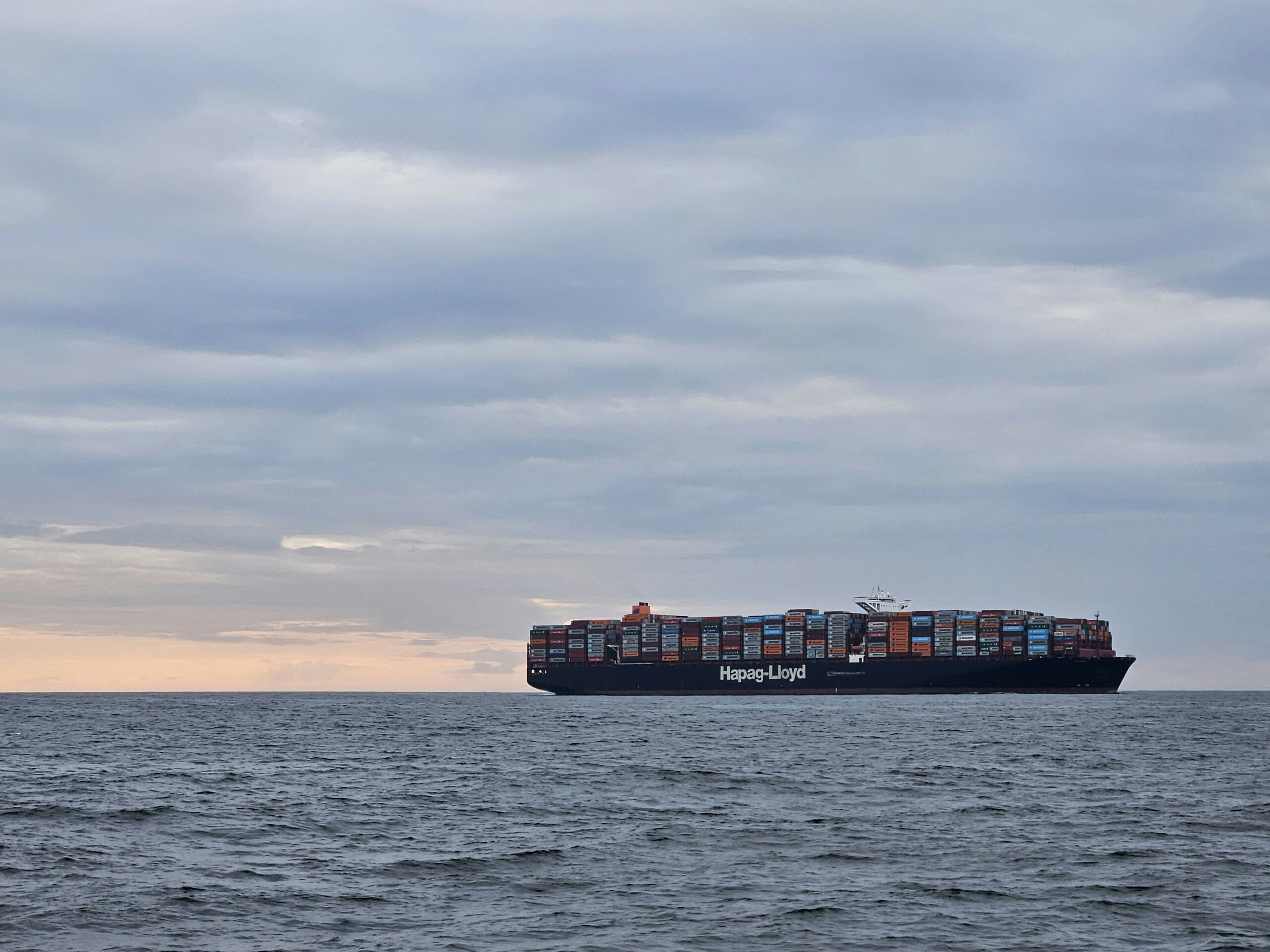
A ship becalmed off the port of Skagen, the northernmost point in Denmark, is a fine place to view and ponder the mechanics of global shipping. Lines of cargo ships, bulk carriers and very large crude carriers, known with an impersonal sort of charm as “VLCCs,” were waiting at anchor for a berth. They dwarfed the Tres Hombres. Fully loaded, it could sail with an equivalent of only one TEU: a 20-foot equivalent unit. The TEU is the backbone of world shipping and, by extension, the backbone of the world economy. If we were to be glib about our existences under capitalism, the TEU is arguably the backbone of human life itself. Vessels flying the flags of Maersk, CMA CGM, Yang Ming — the ships synonymous with shipping — move up to 20,000.
Tres, by comparison, is not moving much of anything. But it’s not alone. A German company called Timbercoast has a ship, the Avontuur, that also does Atlantic crossings, and there are a few others that sail short runs. A French venture, Terre Exotique, ships spices by sail. A craft brewery on the Scottish island of Eigg in the Hebrides recently announced its first sailborne cargo delivery.
Still, even all together, it’s a drop in the ocean.
The idling juggernauts we passed at Skagen were metal and sulfur manifestations of a famously dirty industry. If it were a country, global shipping would come in around sixth in carbon emissions; methodologies of comparison vary, but concrete manufacturing would rank fourth and aviation probably fifth, similar to Japan’s output in total. The fact that shipping is not a country, however, is precisely why it can be so polluting — ships are able to operate in the open, unseen, often lawless spaces of the sea.
Labor laws in the shipping industry are frightful for the same reason. In a Copenhagen bar, a sailor joked to me that he had no visa issues because he was technically, in the view of global legalese, in Polynesia. Same for his boat. The murkiness is not usually favorable for seamen. When a cargo ship collided with and collapsed the Francis Scott Key Bridge in Baltimore in March 2024, its mostly Indian crew was left stranded, neither permitted to enter the U.S. nor to leave the site of the accident. Partly as a result of U.S.-led sanctions on Russia and Iran, so-called “dark shipping” has accelerated abuses of trafficked workers at sea. These problems are not unique to shipping — fishing and other marine industries are rife with cruelties.
A full 3% of all global emissions being generated by shipping might sound enormous, but the figure becomes more reasonable when presented as the transportation of most of our goods across the globe. This argument buttresses the nonchalance of the industry in the face of criticism; the carbon cost of taking a container ship the long way around the Italian peninsula from Venice to Marseille is lower than putting the same cargo onto trucks and driving it direct through the Po Plain.
So perhaps the 3% of world emissions that shipping contributes is less shocking than the tax revenue it doesn’t. A recent report by the think tank Opportunity Green noted that, compared to a global effective corporate tax rate of 21%, the top 10 shipping companies paid an average of just 9.7% on $340 billion in profits from 2019 to 2023. The number is more shocking given that 93% of all shipping profits accrue to those 10 companies, which are often family-owned. Maersk, majority owned by the Moller-Maersk family of Denmark, paid a 5% effective tax rate on profits over $50 billion for that period. The German firm Hapag-Lloyd managed 1.4% on $30 billion. Thanks to Swiss corporate secrecy laws, MSC — based in Switzerland and the world’s largest shipper by fleet size — is barely obliged to report a thing; its growth statistics are known only thanks to mandatory disclosures made when its owners bought an Italian railway. For all the talk of Liberia or Panama — the traditional flag-of-convenience states associated with lawlessness and feckless third-world nongovernance — the guys getting (and staying) richest, ever the world’s sveltest mobsters, are in Geneva, Copenhagen and Hamburg.
Adding to the irony of this trend are the countries bucking it. On its own, China’s COSCO, the world’s largest shipper, paid almost half of all global shipping taxes in the period from 2019 to 2023 at an effective rate of 24%. Taiwan’s Yang Ming (21.6%) and Wan Hai (23%) were the only others to break 20%.
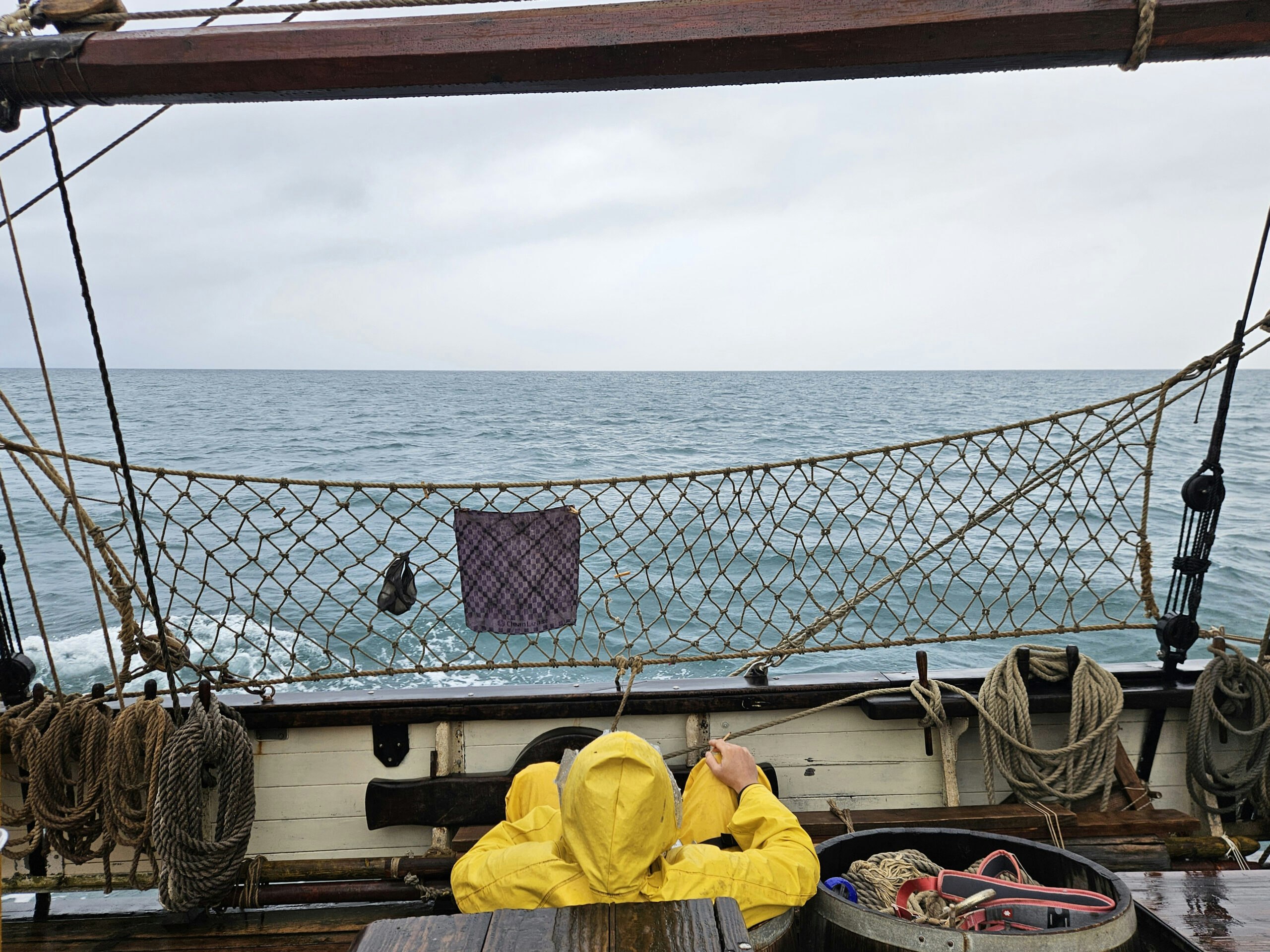
Everywhere in the story of modern shipping you find the hidden poetry of cause and effect, often mingling with evasiveness. Shipbuilders will lay new keels for no reason other than to skirt potential future regulations that exempt boats whose construction began before a certain date. Exhaust-scrubbing devices fitted on chimneys to remove certain chemicals from emissions often benefit the kind of high-sulfur oil suppliers found in places like Canada and Iran, because the sulfur is being removed anyway. Australia — a high-cost refueling jurisdiction — is throwing political weight behind methanol fuel alternatives because methanol’s low energy density favors the voyage lengths in which shippers find they cannot avoid Australia.
What the Tres Hombres and its crew and network of idealists taught me, though, is that there is another way to look at global shipping, a view that exposes different questions: Not how much can we move, but how much really needs moving? How much of everything do we need? What can we get right outside our door? How much of what was replaced could have been repaired instead? How much of what was bought truly brought happiness?
Capitalist existence, and certainly GDP economics, rests on these questions either never being asked or going unanswered, with hidden costs to our societies and souls.
• • •
Sailing round the tip of Jutland into open waters brought reminders that the business of the sea is far from just transport. Fighter jets roared repeatedly overhead, practicing their maneuvers in the North Sea’s empty airspace, an echo of the nearness of war to Europe. Russia’s Nord Stream pipeline lay broken on the seabed to the east of us, apparently sabotaged by Ukrainians. Greenland, technically the only part of Danish territory north of us, is threatened with annexation by the U.S.
One afternoon, a British aircraft carrier crossed our path, its runway lifting at the bow and radar arrays turning. It gave no word of warning nor instruction over the radio, and we tacked to change course sharply around it. The British have two such carriers, both newly commissioned for a world now trending away from the brief period where it seemed like public spending was destined for green industry rather than militarism. Poland recently gained EU approval for €6 billion in unspent Covid recovery financing to be shifted from green industry and sustainability projects to the military. Target spending on weapons systems among NATO members was 2% of GDP a decade ago and then lifted to 3.5% upon escalation of the war in Ukraine. In 2025, Donald Trump announced a new 5% target as a “big win for the U.S., Europe and Western civilization.” While the climate movement seems mostly burned out, fossil fuels and the military industrial complex rage with renewed vigor. The application of artificial intelligence to weapons systems — ranging from targeting to robotics — exposes how the technology and finance sectors are enjoying the militarist boom. Google’s founding maxim, “Don’t be evil,” now feels very distant.
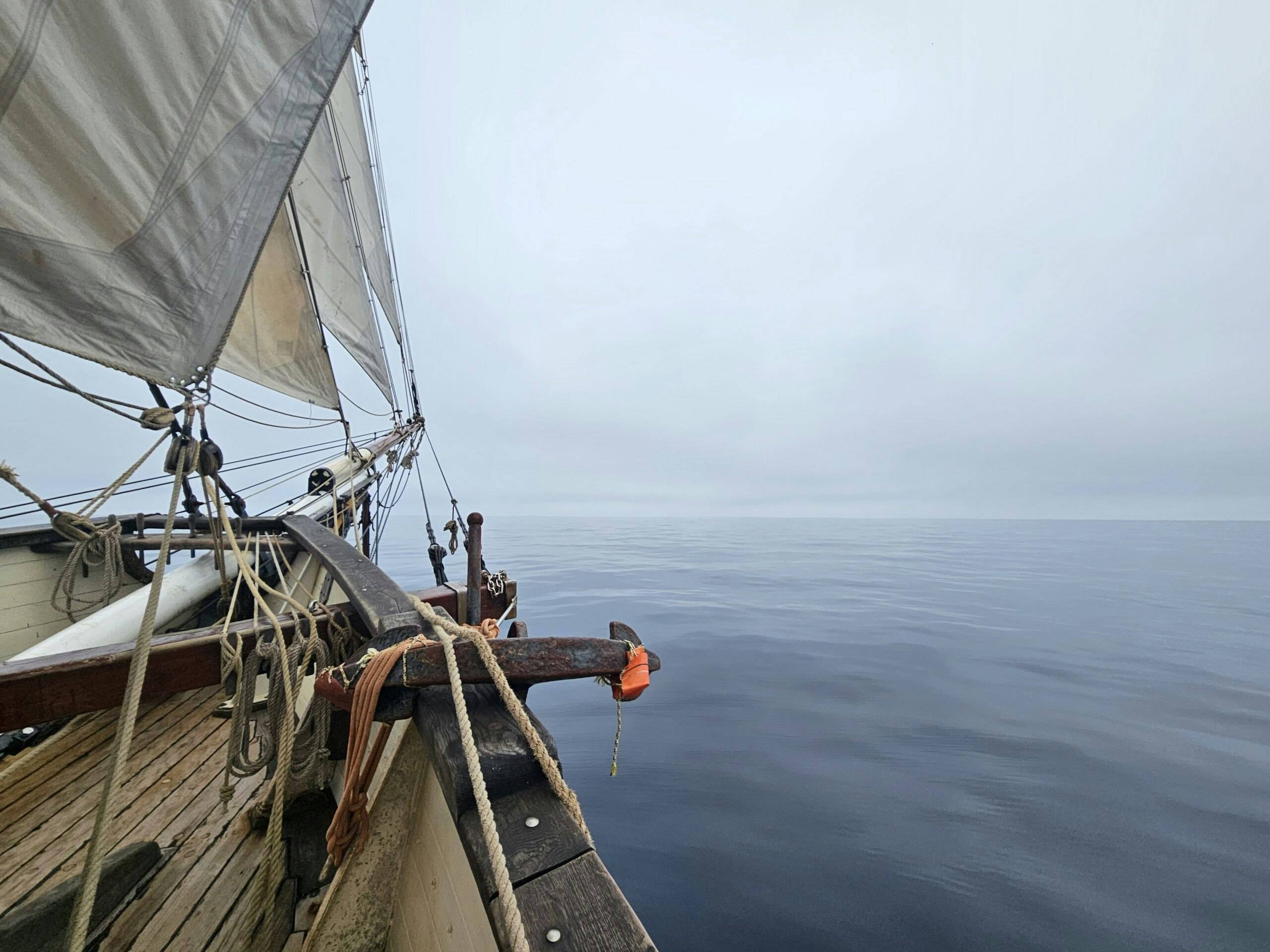
All day and all night we saw the tankers driving constantly on through the mist; at times when the water was eerily calm, with no movement on our ship save for a windless sail slapping a gentle tantrum against itself, we heard their huge engines humming, the drone of a world economy that never sleeps. At night, in the distance, we saw an endless procession of oil and gas platforms illuminated like candelabras, and I could not decide if they seemed to be holding a vigil for a dying industry or firing up a rejuvenated one.
Once, we watched a delivery of turbine blades on its way to a wind farm. Viewed through binoculars, the blades appeared stuck to the back of a large ship like pins in a pin cushion. Another ship carried yellow monopiles: the large steel structures that brace a turbine to a seabed. Crossing between Norway and Denmark in waters only 65 feet deep, we passed over the gigantic undersea interconnector, Skagerrak, which was named for this small sea and moves Norway’s vast surplus of power output, largely from hydropower, toward Denmark. The electromagnetic interference of an almighty 1.7 gigawatts sent our navigational instruments into a skitter. In short, we saw everything: the world and how it is fueled, powered, fought and fed.
A comparatively brief 10,000 years or so ago, in colder times, there was no ocean here to sail on — it was ice and land. A person could walk from the flat farmlands of Norfolk to the flat floodplains of the Netherlands. The shallowness of the North Sea facilitates oil and gas exploration and also its wind turbines, fixed to the seabed on their monopiles.
Late one afternoon, our chef threw out a line of hooks and barely half an hour later hauled back three luckless, dancing mackerel, their blue-grey stripes glistening in the sun. Anne-Flore gutted one and removed its heart, which she said Breton fishermen sometimes eat in ritual. She handed one to the deckhand, Clement, a small red-brown corazon beating its last on the surface of his palm. He lifted it to his mouth, chewed and swallowed, and everyone fell about laughing before a few of us followed suit. By evening, we had almost 30 small mackerel caught and laid in an oven tray, dressed with orange and tomato and onion and herbes de Provence.
Later, after the galley was cleaned, I watched the sails and their lines groaning as we moved on a low wind that failed to keep them full. Different iterations of sail fundamentals have appeared over the decades of experimentation in shipping innovation. In the 1920s, the German aviation engineer and inventor Anton Flettner developed a cylinder that, mounted like a mast on deck, rotates with the wind and generates power that offsets fuel usage. Maersk recently installed these Flettner rotors on one of its ships, and Airbus, not just an aircraft company, will reportedly soon launch six ships equipped with them.
As with every question of overhauling shipping, the deciding factor is fuel cost: If it is high — whether because of oil prices or carbon pricing on emissions — there is incentive to change. Without such a concern, there isn’t.
The 1973 oil crisis spurred a spate of design innovation, including such creative fuel-saving measures as kites on boats, a concept still pursued today. For almost 20 years, the ship Beluga Skysails has been partly towed by a 520-foot, computer-controlled kite secured by cables, but it has achieved only around 5% fuel reduction. In the 1980s, Japan began designing what are known as Dynarigs — rotatable masts and electrical controls to refine sail operation. But by the 1990s, oil prices had dropped and shipping was trending toward gigantism in pursuit of economic gains through size rather than fuel efficiency, and the quest for more innovative ship designs stagnated. Wind turbines on boats continue to show potential on paper, including the ability to sail dead against the wind because power remains even when the direction doesn’t. But they operate best in transverse winds — where wind blows across the ship, which interrupts aerodynamics — and are enormously tricky to fix to a ship in the first place.
“The lesson” of decades of experimentation and innovation, as Vivien, the French naval architect, wrote in an email I received during a rare moment of signal access, “is that the solutions that worked best were those that took the old, proven concept of the traditional rig and made small upgrades to it. Because the sea is harsh and unforgiving, the risk of revolutionary design where so many things can go wrong is too high.”
IV. North Sea
For all the bonhomie of the journey, not all relations on deck were easy. Nerves frayed and needed to be spliced every bit as much as the ropes. Tiredness stalked the crew. A ship might well be an escape but, once aboard, there is no place to get away. A crewmate seeks conversation just as you look for solitude; only one patch of sunshine reaches the deck, and someone is already sitting in it; a sail needs hoisting right when Anna Karenina meets Count Vronsky at the ball. There are no strolls, no cafes, not much to do other than work, eat, sleep, repeat.
To support human well-being at sea, the International Labor Organization established the Maritime Labour Convention. It stipulates that there must be 77 hours of rest a week, with a minimum of 10 per day, including one break of six consecutive hours. That such basic rights were introduced only in 2006 says something of the forgotten lot of the world’s sailors. And the stipulations raise attendant questions. Can time spent eating be considered rest, or is it essential? Is sleep only rest or a function every bit as vital as boat maintenance?
As a red sun sank below the horizon late one evening in the North Sea, I watched the moon rise in the other direction with Lars, a Russian-German crew member. Our ship creaked between the two, the stars a series of pulleys that winched day into night. Lars lives in Hamburg with a Turkish partner. “Yakamoz,” I said — the much-loved Turkish word for moonlight’s reflection on water. (A language should always be equipped with words so precise.) He smiled. “Lunnaya dorozkha,” he said, the equivalent phrase in Russian. “Moon path.”
Next dawn, the sun kissed the leaves of a tomato plant someone had named Tina, which was now starting to give its first yellow flowers in promise of fruit. It was impossible in such a moment not to feel conscious of all that we are losing on Earth: the human lives and natural ecosystems that have been informally and undemocratically determined to justify neither pause nor change in the fanatical business of power. Already it is too late for many species, habitats and uncountable humans whose lives and consciousnesses seem to have been sacrificed. But still, we all retain the power to act, and to act earlier yields outsized gains, while delay is perilous. Perhaps on land such thoughts are pointless these days, but out here, the grace of the sun and sails give permission. In the face of Earth’s majesty, I think, it seems a greater sin to be irreverent than profound.
“Julian!” came a loud call from a deckhand in a French accent. “Pump the bilge!”

Each morning we scrubbed decks, throwing buckets of seawater across them to swell the timbers tight together. The saltwater cures the wood, ensuring a hostile environment for any organisms nourished in the freshwater of rain or heavy mist, thus keeping rot at bay. Likewise, we pasted tar between the strands of new ropes made of manila, creating an airtight core in the natural fiber that had been chosen over nylon ropes. Looking at the black behind my fingernails, I considered all the tar and linseed oil implicit to the passage of our luxury products: the chocolate, wine, the artisan honey, the vermouth destined for negronis in fashionable bars. The modern economy is predicated on a promise to invisibilize the tar in my fingernails. Aboard, just as excess is not an option, so too can nothing be hidden.
Finally, a shy wind found and blessed our sails. The knots picked up, periodically boosted by a favorable tide. We were pointed east toward the English Coast, sailing through a corridor between the Hornsea and Dogger Bank wind farms, which trade places as the world’s largest as they expand. White blades turning against a blue sky towered over the corroding skeleton of an offshore oil platform called Boulton. Considering the view, Jeremy, the second captain mate, said: “That’s the history of the North Sea. They fished out the Dogger Bank, then came the oil, then the gas, now the wind farms.”
A true story, but not the whole one. The world’s energy transition, such as it is, is something of a fairytale. We’re using more energy, not less, with renewables coming into the mix to satisfy growing demand in the production of goods, in shipping them and in the homes they are destined to.
The French writer Jean-Baptiste Fressoz makes an absolutist claim that the energy transition simply does not exist; we continue to burn hydrocarbons at increasing rates, augmenting that unrelenting overall energy demand with a new fleet of renewable sources. The age of coal, he points out, likewise began with a burgeoning need for its predecessor fuel source, timber, no longer to burn, but to gird the new mineshafts and pits from which the coal was to be hewn. Coal then powered the derricks of the early oil era, and its usage rose throughout a 20th century defined by oil. Today, wind turbines are installed around mines to provide cheap power, oil firms are experimenting with generating energy from the waves hitting against extraction platforms, and cargo ships are out there cutting the seas with small wind turbines aboard that might power the lights but not the engines.
In other words, fossil fuels persist, both in their combustion and political heft. Oil prices cratered to zero at the advent of the Covid crisis, prompting, according to one estimate, $15 billion in bailout funds from the U.S. government alone. No equivalent support arrived for wind energy when the war in Ukraine and sanctions on Russian energy, alongside high interest rates and spiraling material costs, meant that an opportune moment for a full transition to greener fuels instead saw an industry left in crisis. A 2023 U.K. auction for rights to develop new offshore wind power received not a single bid; the same process the previous year secured almost 7 gigawatts, enough to power more than 7 million European homes. Under Trump, the U.S. adopted an outright hostile policy toward its own offshore wind sector, one that even the creation of thousands of new jobs couldn’t prevent. The Ørsted share price has been beleaguered ever since.
Fortunes for hydrocarbons couldn’t be more different, as shipyard orderbooks attest: The vessel now most in demand for construction is the LNG tanker, and new LNG port terminals are being approved all across the Gulf of Mexico, from Louisiana to Corpus Christi. The returns promised to investors, however, will rely on convincing forecasts of a coming global LNG supply glut, with LNG prices plummeting accordingly, proving unfounded. There could yet be a poetic irony, and a wider lesson, that the environmental laws by which campaigners were successfully opposing terminals in the U.S. indirectly also protected U.S. investors from the irresponsible overpromises of fossil fuel moguls.
No such largesse is found in the small world of wind-powered shipping. In Costa Rica, rising costs forced a company called Sailcargo to halt its effort to build a ship larger than Tres Hombres, the Ceiba, creating a scenario of truly Fitzcarraldo proportions: a half-built boat waiting on the edge of a mangrove swamp for an angel investor. In the Netherlands, EcoClipper and its vessel, the Der Tukker, had a simple cargo operation and aspirations to roll out an affordable and replicable boat design, hoping to prompt a sail cargo renaissance. Bankruptcy ensued and the boat was sold to a Westminster politico who will live in it on the Thames, marking the end of the boat’s working life.
And then there are the customary hazards of seaborne shipping. In 2024, the De Gallant — shipping coffee, cocoa and cane sugar from Colombia to Europe — was hit by a violent squall and capsized in the Bahamas. Most of the crew members were rescued, but two drowned. BEAmer, the French body that investigated the disaster, noted the ship’s small crew size was a contributing factor, with too few hands to quickly man the sails as the freak storm came in. Fitting electric motors to sails could help remedy such a problem, more evidence that technology need not be a nemesis to sailing tradition.
As a backup project to the Ceiba, Sailcargo purchased a ship called the Vega but then fell afoul of capricious insurance requirements, leaving the company able to ship only passengers, not cargo. Vega now sits in port in Amsterdam, some of its costs offset by rental as a holiday home and educational tours, trying to find a solution hopefully faster than the rot finds it. The Tres Hombres avoids some such problems because it lacks an engine: It’s easier to insure a wooden ship without one because engines and fuel pose obvious fire hazards, particularly if the principal cargo is explosive, as is the case with large quantities of rum.
In every respect, what is apparent is a superabundance of ideals stymied by reality, with no political will to bridge the two. In another email, Vivien summarized the underlying issue: “We should think carefully of what we want: conglomerates carrying huge quantities of questionable goods around the world, using disastrous manufacturing and discarding climate impacts, and a polluting transport network around a few giant harbours on land? Sail or other green fuels won’t change the fundamental problem. But if we want a world of local and small scale, where only products respectful of the environment are transported, through the cleanest path between small producers, farmers and retailers, a project like Tres Hombres may not be perfect, but it is well ahead of almost everyone.”
V. La Manche
For the first time in a week we neared land, though it remained out of sight. A stiff westerly blew off Norfolk, and we smelled the eternal and unmistakable smell of nutrients in earth, soil, marshland. We swung round the Thames Estuary and pressed into the English Channel, La Manche, the sleeve. The wind propelled us into a heavy English sky and a thin rain soaked those of us on deck.
Over our radio came the voice of the Coast Guard announcing a swimmer, last seen drifting 650 or so feet from the coast. A “swimmer” means anybody in the water. A search was on, and our monitors showed boats and aerial surveillance over the sea behind us. Later, another mayday call described the swimmer as a Black man with no clothes. Another sailboat, a Dutch yacht, was nearby and crackled through on the radio: “We hold position and keep sharp lookout.”
Turning away from the charts and monitors, Anne-Flore guessed the man was a refugee. “It makes me shudder,” she said, her voice full of disbelief and sorrow. In Britain recently, far-right politicians made a scandal of the volunteers of the Royal National Lifesaving Institute (RNLI) rescuing refugees from the same cold, dark sea we were now cruising over. In response, a historically large influx of new members and donations flooded into the RNLI, evidence of a silent majority determined to reject efforts to construct such a horrifying new normalcy. Perhaps their problem is less the numbers and more the silence.
The last time I was within sight of the Dover cliffs, almost a decade ago, I had ridden a bicycle from London, boarded the ferry to Calais and then cycled to the refugee camp beside the port. This was during Europe’s last refugee crisis. The bicycle had been given to me by a former oil man with a guilty conscience who’d once ridden it around the sprawling oil fields beyond Houston; he liked the idea that donating it could ease the 3-mile journey of refugees on their way to town for provisions. I arrived then and handed that bicycle to an Eritrean family. I wonder where it and the family are today.
Coming up on the shipping lane, large ferries and cargo vessels loomed on the horizon. Our sails began to flag and we could not attempt to cross without a fair wind or else risk a collision. “Like a child getting ready to run across a motorway,” Nick, the first mate, said mordantly.
For the first time since we were alongside the Dutch coast, we entered a space with strong phone reception. I saw the first news of Gaza in weeks, where emaciated Palestinians were still being starved by the Israelis. Children who posted regularly looked visibly thinner than I remembered. Friends in Palestine and Lebanon were struggling on. The part of me that had perhaps come back to life those past weeks faltered a little. Gaza, truly, exposed the world and its hypocrisy. A political system that can permit or enact genocide has already fallen into the abyss where anything is permissible. Anyone seeking constructive change in such a world — on multilateralism, climate, shipping or whatever else — must heed the message of Gaza: In the event that the elites of our global capitalist techno-carbon kakistocracy take your arguments seriously at all, even an extermination campaign of mass death does not guarantee that they will raise a finger to stop the carnage. In politics as in all morality, everything is downstream of genocide.
For a day we waited north of the lane for the wind to pick up. Finally, in the gathering dusk, we made our move between a bulk carrier and two container ships that towered over us. Our sails passed under the stern with the necessary 3,000 feet of separation. The horizon opened upon France. Soon after, a pod of dolphins broke the surface of the water, swimming under and alongside our hull to leap in the bulge of water swelling from the bow. A perfect sun bled into an escarpment of cumulonimbus, like the molten end of a rod of iron plunged into water.
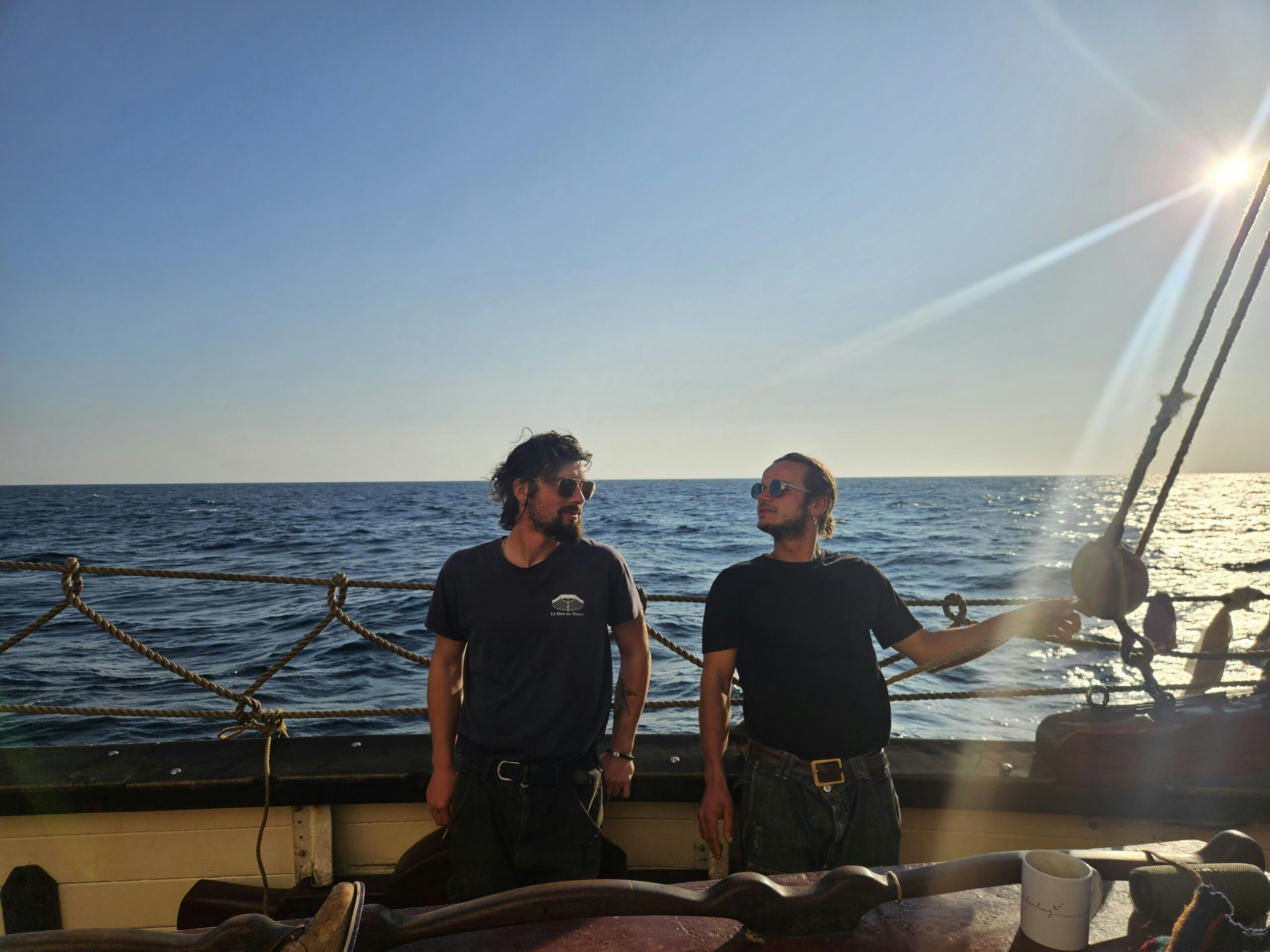
At night, our masts stirred at the stars in the bright night sky. Once again, the boat and its waves disturbed the bioluminescence of the sea. Red light from a headlamp strafed across the wood and water as a deckhand wrestled a jib sail that had howled loose in the wind. The dolphins reappeared, swimming in bursts of bioluminescence like bright torpedoes trailing entire aquatic galaxies behind them.
A lamp from the galley, spilling light onto the deck through an open door, beckoned to me. A deckhand was peeling cacao nibs with a small knife, each shelled nib tinkling into a metal bowl. I went in and laid down on a bench, resting before the daily 5 a.m. bread-baking session. Nets of onions and bulbs of garlic hung on strings from the ceiling next to a line of cups swinging on hooks by their handles. A clock ticked; a ladle clinked on ceramic tiles. Outside, waves crashed.
I considered the ticking clock. For many centuries, accurate ship clocks were elusive because motion upon water (as well as humidity, temperature and numerous other factors) disrupted their pendulums. Accurate timekeeping is essential to measuring speed and distance, and its absence creates a fatal information failure when approaching land or rocks. In the 18th century, British clockmaker and engineer John Harrison began designing a series of clocks that mitigated the disruption of motion and eventually developed the first reliable marine chronometer. A dour Yorkshireman who moved awkwardly in London’s high society and political circles, Harrison was left marginalized, forced to pursue in court the prize money his inventions had rightly won, money that had been intended to finance their ongoing development.
In time, Harrison’s innovations were recognized and utilized, dramatically improving marine navigation, which was essential for Europe’s ongoing colonization of distant lands. But his story is a lesson that, then as now, no technology nor knowledge will change shipping without the politics that disseminates it. The same goes for efforts to save humanity from the darkness that is so easy to stumble into. History is a graveyard of genius, invention and principles. Whether through elitism or institutionalized corruption, there is no progress that cannot be stopped dead by politics atrophied by oligarchy and stupidity. The flawed doctrine that technology will save us is often inadequate through no fault of technology, but the politics we neglect even as it limits that which we are able to engineer.
VI. La Rochelle
In the words of the Egyptian dissident Alaa Abd Al-Fattah, recently released from his cell, “You have not yet been defeated.”
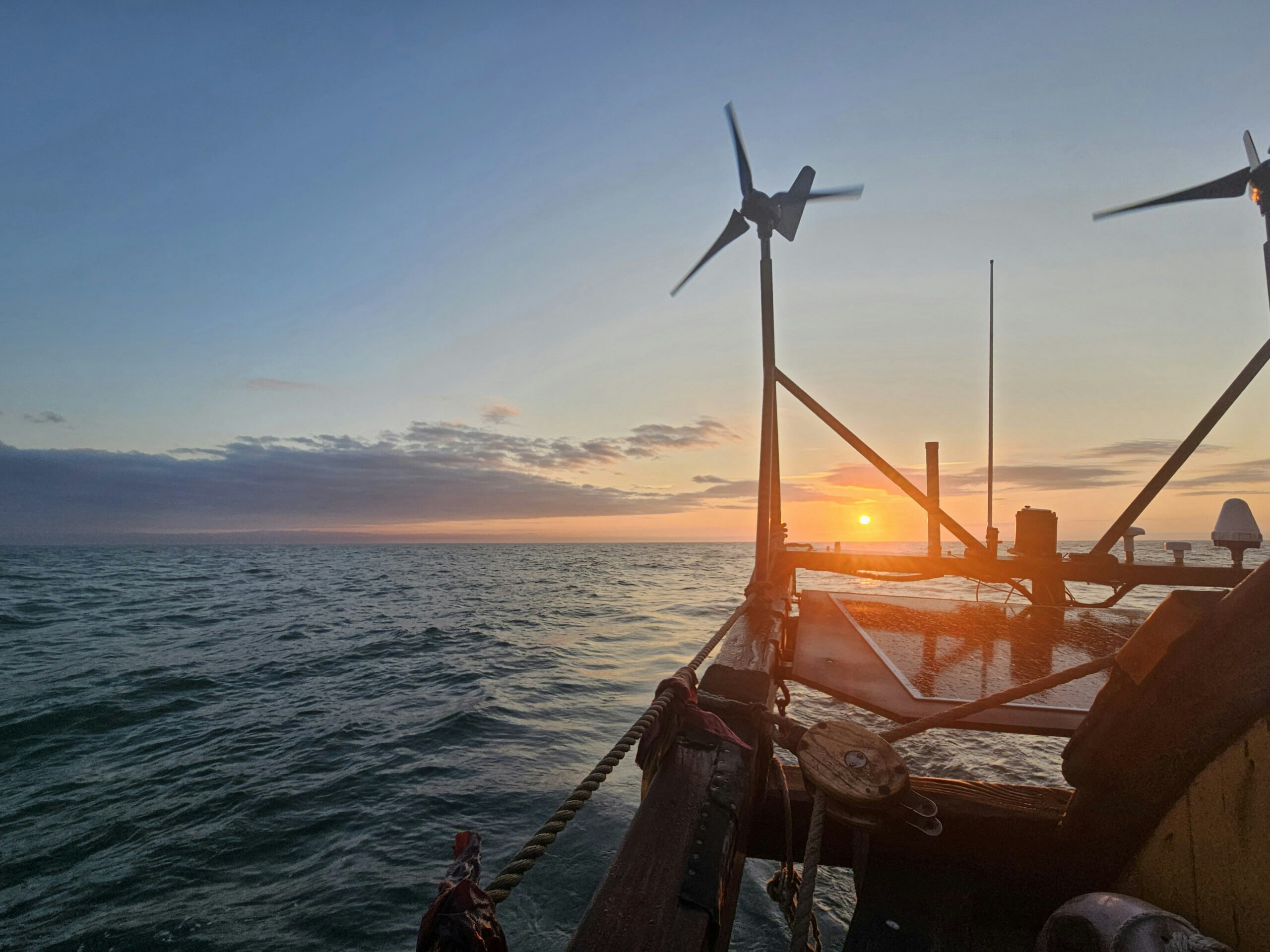
For all that society has lost, in moments of quiet aboard the ship, I could not help but feel that eventually we will get it right, though this will require a consciousness beyond the catechism of carbon. Whatever the inadequacies of a narrow focus on electrification or renewables, each time I saw the architectures of offshore wind being constructed, or the mighty sails of the Tres Hombres, or the sun beating down on the boat’s solar array, or our small windmills that powered our navigational instruments, lighting and batteries, I was certain that the world’s growing renewable energy supply is integral to what must be done.
East we went toward La Rochelle, the wind steady at last on our final morning. I felt the hypersensitivity I developed to 14 other individuals, remolded briefly as a society that chose to live otherwise. Among the crew, an excitement set in as news pinged that a friend of the boat, whose family owns a windmill near town, would bring bags of flour, replenishing dwindling supplies for the northern leg back to Amsterdam.
Tug boats towed us into the harbor where crowds had gathered to watch. The ship looked as fine as ever, and I thought the crew members were seeing it anew in the excited eyes of others. The day was Saturday: Children were out on bicycles with their parents; everyone smiled in the sun. On a walk through town, I passed a terrace where people were drinking pastis in the early afternoon. I had a vague sense that I might love everybody.
My legs quickly readjusted to solidity, though for days I was disoriented when I first stood up out of bed, and I swayed down corridors, compensating for waves that were no longer beneath my feet. Still sleep-deprived, I meandered through town, amazed that my time was again my own. I stopped in a park, laid on the grass, lowered the peak of my cap, dozed. I saw a yacht called the Antares, the name of a red supergiant in the Scorpius constellation. Among the brightest stars visible to the naked eye, it was first pointed out to me by a sailor friend in the Andaman Sea. That friend has since died, old but still too young. Antares was dying when he was born — indeed, well before he or any of us was born, for millions of years it has been dying. Some deaths are slower than others.
In the days ahead, 18,000 bottles of wine from vineyards up and down the Loire Valley would be taken aboard the Tres Hombres, though the loading was delayed until Monday due to French and European laws proscribing the delivery of nonperishable goods on Sundays, so that drivers might rest and have a life outside the cab of their truck.
There is a tendency to view ideals and idealism as fantasies we cannot accommodate. In reality, the contrary is true. All the good that humans have built was the result of effort by idealists and believers with the propensity to prove that what is unexpected or hard could be widely beneficial, by those with the willingness to insist, to strive, to sacrifice, to not compromise, to remain steadfast, to practice sumud.
From the quay, I looked at the ship with its sails now furled and masts shining in the sun. I looked at the crew, to which in some small way I will now always belong. I saw the families walking through a coastal city so fair. I saw a new crew arriving and readying the hold for new cargo. I could not help but think that something special had happened there: a flash of beauty amid the banal, some bioluminescence trapped in a bucket.